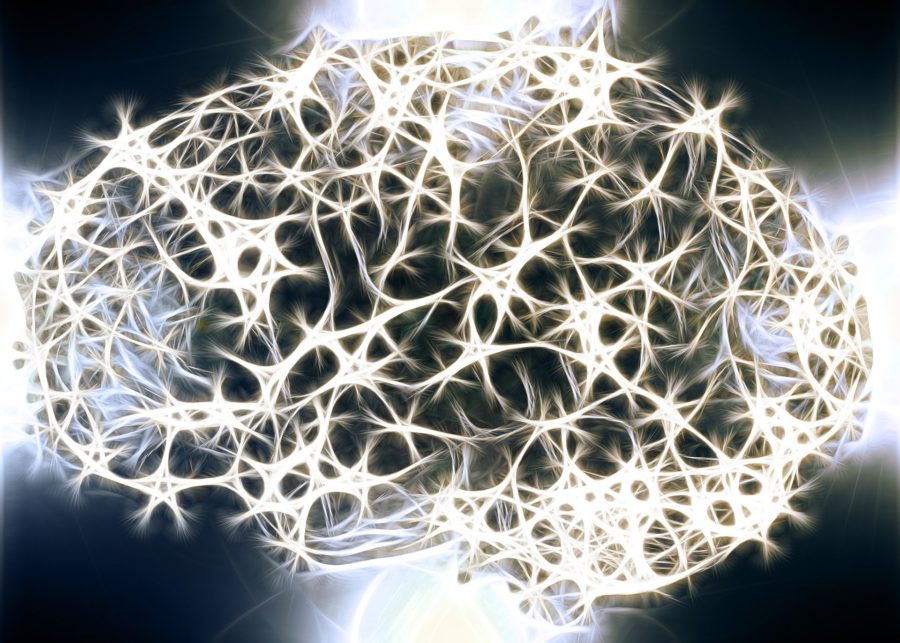
Astrocytes are star-shaped glial cells found in the connective tissue of the central nervous system. This type of glial cells are, in fact, synapses that support the flow of chemical and electrical impulses between the cells. How the astrocytes are arranged has to do with their chemical and electrical communication with the other cells.
Their function is to link the nerve cells to blood vessels, regulate the activity of the surrounding synapses, maintain the chemical environment needed for the relay of information between the neurons, and form the blood-brain barrier by wrapping the brain capillaries.
A blood-brain barrier is a semi-permeable membrane between the brain blood and the extracellular fluid of the central nervous system, including the brain and the spinal cord. This barrier supports the astrocyte glial cells to prevent toxins from entering the brain.
Due to their extensive branching (hence the star-shaped appearance), the astrocytes can connect to the soma, dendrites, and axons of a large number of neurons.
What Are Glial Cells?
Glial cells are the chief suppliers of nutrition and oxygen to the neurons. While the neurons relay the signals from one neuron cell to another via neuron impulses in order to control different parts of the body, the glial cells support and protect the functions of the neurons.
This type of cell in the brain coordinates the actions of the neuron cells by guiding them to their final destination, thus playing an important role in neurotransmission. By removing the pathogens from the brain, they also protect the central nervous system from inflammation and infection.
What Are the Types of Astrocyte Glial Cells?
According to their anatomical classification, there are two major types and several subtypes of astrocyte glial cells:
- Protoplasmic astrocytes
- Fibrous astrocytes
Protoplasmic Astrocytes
This type of glial cell is located in the gray matter of the brain. They branch out extensively and connect to the terminal parts of the neuronal axons.
They have specialized neurotransmitter absorbing molecules that support the termination of the action potential of the cell.
Fibrous Astrocytes
This type of glial cells are located in the white matter of the brain. They appear fibrous due to the accumulated glial fibrillary acidic proteins in their cytoplasm.
The glial fibrillary acidic protein (or: GFAP) supports the maintenance of the astrocytes’ structural integrity and aids the movement within the cell, as well as its shape change.
Subtypes of the Astrocyte Glial Cells
The other subtypes of the astrocyte-glial cells include:
- Pituicytes – This sub-type refers to the astrocyte glial cells that are found in the back part of the pituitary gland, i.e. the master gland of the endocrine system. The main role of the pituicytes is to support the storing and release of a type of peptides labeled as neurohypophysial hormones.
- Olfactory ensheathing cells – This sub-type refers to the astrocyte glial cells that are part of the olfactory nerves (responsible for the relay of the sensory stimuli gained from the sense of smell) and the bulb’s tissue.
What Is the Function of the Astrocytes?
The astrocytes are responsible for providing the ultimate chemical environment for the transmission of neuronal electrical impulses. This type of glial cells also regulate the levels of extracellular neurotransmitters and participate in the body’s immune response.
From here, we can determine that the astrocytes participate in the following processes and have these functions:
- Structural function
- Glycogen fuel reserve buffer
- Metabolic support
- Glucose sensing
- Blood-brain barrier
- Transmitter uptake and release
- Regulation of ion concentration in the extracellular space
- Modulation of synaptic transmission
- Vaso Modulatory function
- Promotion of the myelinating activity of oligodendrocytes
- Nervous system repair
- Long-term potentiation
- Circadian clock
Structural Function of the Astrocytes
As the most abundant type of cells in the central nervous system, the astrocyte glial cells comprise the brain structures and control the relay of the electrical impulses within the structures of the brain.
Glycogen Fuel Reserve Buffer Function of the Astrocytes
The astrocytes contain a multibranched polysaccharide of glucose, i.e. glycogen, that serves as a source of energy to the neurons.
These cells both store and produce glycogen, thus being the only type of cell capable of gluconeogenesis.
Metabolic Support of the Astrocytes
The astrocyte glial cells support the release of lactose from the glucose, which is used by the neurons as energy. In this way, they provide nutritive substances to the neurons.
Glucose Sensing of the Astrocytes
The levels of glucose in the brain are also controlled and regulated by the astrocyte glial cells via the GLUT2 transporters.
Blood-brain Barrier Function of the Astrocytes
The astrocyte glial cells support the formation of a blood-brain barrier by secreting regulating chemicals. These chemicals manage the way in which the capillary endothelial cells transmit the chemical substances from the blood to the central nervous system.
The blood-brain barrier prevents any leakage of any toxic substance from the blood in the brain capillaries to the extracellular matrix of the brain.
Transmitter Function of The Astrocytes
This type of glial cells extract plasma member transporters, i.e. neurotransmitters, including:
- Glutamate – The neurotransmitter glutamate is found in both the brain and the spinal cord. This powerful neurotransmitter supports the transmission of signals between two neuron cells.
It also plays a vital function in the early development of the brain, the cognitive processes (especially learning), perception, as well as memory. When the concentration of glutamate is too small, it can lead to coma, psychosis, or even death. On the other hand, an extremely high concentration of this neurotransmitter can cause seizures and brain cell death.
- GABA – Gamma-aminobutyric acid is the main inhibitory neurotransmitter in the central nervous system of mature individuals. It’s also the amino acid with the most vital function in the human body – it reduces the activity to which it binds to.
The amino acids are the building molecules of proteins and have the most vital function in the human body. They also contribute to the synthesis of hormones and neurotransmitters.
Regulation of Ion Concentration in the Extracellular Space Function of the Astrocytes
The astrocytes are involved in probably the most vital function – the regulation of the concentration of ions around the neuron channels in the brain. Potassium channels are the most widely distributed type of ion channels.
Depending on the ion concentration, the generation and the relay of the electrical impulse can be either stimulated or blocked from being transmitted.
Modulation of Synaptic Transmission Function of the Astrocytes
The astrocyte glial cells are involved in the regulation of synaptic activity between neurons and they ensure adequate neurotransmission.
The protoplasmic processes of the astrocytes support various synapses that are created between the neurons in the central nervous system by removing the excess calcium molecules and neurotransmitters.
Vaso Modulatory Function of the Astrocytes
The astrocyte glial cells also act as vaso-modulators. Namely, the astrocytes aid the increase of blood flow when neurons are most active.
Support of the Myelinating Activity of Oligodendrocytes
By performing their executive-coordinating role in the brain, the astrocytes support the myelinating activity of the oligodendrocytes.
Namely, when they are activated by the electrical activity of the neurons, they release the ATP that triggers the production of myelin. But, before it affects the oligodendrocytes, the astrocytes secret a regulatory protein that supports the myelinating activity of the oligodendrocytes.
Nervous System Repair Function of the Astrocytes
The astrocytes play a vital role in the repair of the neuronal tissues of the central nervous system. After an injury, they become phagocytic and support the removal of the damaged tissues. They can also form glial scars.
It is this glial scar that plays the most important role in the process of regeneration because it spurs the growth of the axons and helps them pass through the injured tissue of the spinal cord.
Long-term Potentiation of the Astrocytes
These star-shaped glial cells help the brain encode, consolidate, and store long-term memories.
The Role of Astrocytes in the Circadian Clock
By responding to stimuli through the calcium-dependent release of glutamate, the astrocyte glial cells aid the regulation of the sleep cycle via the mechanisms activated in structures of the cerebral cortex.
What Happens If the Astrocyte Glial Cells Are Damaged or Dysfunctional?
Damage inflicted to the astrocyte glial cells can result in the following medical conditions and diseases:
- Astrocytomas – Brain tumors developed from the astrocytes. i.e. a collection of abnormal astrocyte glial cells that spread rapidly within the skull. Since the skull is a rigid structure, the abnormal multiplication and growth of these brain cells creates pressure on the brain structures.
These tumors are graded on a scale from I to IV based on the abnormality, i.e. degree of mutation of the affected astrocyte glial cell:
- Pilocytic Astrocytoma (also called Juvenile Pilocytic Astrocytoma, Grade I tumor)
-
Diffuse Astrocytoma (also called Low-Grade or Astrocytoma, Grade II tumor)
-
Anaplastic Astrocytoma (Grade III tumor)
-
Astrocytoma Grade (also called Glioblastoma, Grade IV tumor, or “Glioblastoma Multiforme,” “Grade IV Glioblastoma,” and “GBM”)
- Alzheimer’s disease – A brain disease that is characterized by a decline in memory, thinking, and reasoning.
- Alexander’s disease – A rare disease triggered by the destruction of the myelin sheet enveloping the neurons in the cerebral cortex. Also, there is an abnormal deposit of protein that results in a mutation of the GFAP- the glial fibrillary acid protein.
The glial fibrillary acid protein is expressed in many types of cells located in the tissues of the central nervous system, but it’s most often found in astrocytes.
To Sum Up
The astrocyte glial cells actively participate in the regulation of hypothalamic feeding circuits. These non-neuronal cells play a vital role in determining the functional interactions among specific neuronal substructures involved in the control of the metabolic processes in the human body.
The astrocyte glial cells are involved in various processes, such as physical and metabolic support for neurons, electrical insulation for the unmyelinated axons, detoxification, regulation of energy metabolism, transport of blood-borne material to the neuron, as well as reaction to injury.
Fun Facts
Did you know?
- Without the glial cells, the neurons would not be able to perform their function in the brain. They guide and support the communication between the neurons, and protect both them and the brain from toxic substances.
- Microglia is the smallest glial cell. It’s derived from the mesoderm and the glial cells in the brain.
- Since the brain is the most voracious organ in the human body (it consumes 10 times more nutrients and oxygen than the other organs), it would starve without the glial cells.
- Gluconeogenesis is the process of production of new glucose molecules in the human body.
- Behind every thought, action, or dream there is a complex chemical process developed and conducted in our brain.
- Astrocytes comprise about one-third of all glial cells in the human brain.
- Glial cells communicate via intracellular waves of calcium molecules.
- ATP is the main carrier of neuronal energy, used for all cellular activities.
- We need ATP mostly for our muscles and endurance.
- The most common symptoms of astrocytomas are headaches, seizures, memory loss, and changes in behavior.