Memory is the most significant aspect of human thought. The study of human memory has been a subject of science and philosophy for centuries – it extends back millennia to the ancient philosophers. It’s also one of the significant themes of interest in cognitive psychology, which is very popular nowadays.
Memories expand our knowledge of the world around us. By consolidating the learned information into lasting memories, our brain enables us to understand our surroundings and improve our behavior. In this way, our memory provides context for our lives.
Since human memory makes a fundamental contribution to our everyday mental experience, neuropsychologists have been working on establishing a basic theory that explains the nature and the characteristics of the memory processes and systems that govern human beings.
What Is Cognitive Psychology?
Cognitive psychology is a popular and useful branch of psychology that explores mental processes such as memory processes, attention, language use, perception, problem-solving, child development, creativity, and thinking.
The main aim of this branch of psychology is to research the human thought process studying perception, decision making, memory, and judgment. In doing so, cognitive psychologists examine how a person gathers, processes, stores, and recalls information. They perform experiments on how we can improve memory, as well as experiments that help us understand why some people can recall information faster than others, what influences decision making, etc.
The History of Memory Research
The scientific thought on memory has developed over time influenced by many thinkers, from the great philosophers of ancient Greece to the leading cognitive psychologists today.
Plato’s Theory of Memory and Learning
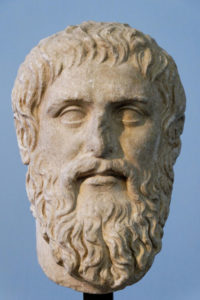
Plato (428–347 B.C.), a rationalist philosopher, was among the first ones who claimed that all the knowledge we have already exists in our memory. According to him, memory serves as a bridge between the world we perceive and the sensible world of idealized abstractions.
Aristotle’s Theory of Memory and Learning
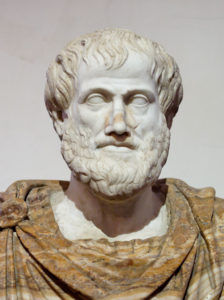
Aristotle (384–322 B.C.) was a pupil of Plato who believed that memories result from the interactions between various stimuli and experiences, i.e., multiple elements that are mentally linked to one another. According to Aristotle, memory associations link similar ideas that follow one another in our consciousness.
The British Empiricists’ Theories of Memory and Learning
The British empiricists George Berkeley (1685–1753), John Locke (1632–1704), John Stuart Mill (1806–1873), and David Hume (1711–1776) later followed Aristotle’s ideas on memory association and expanded on them through their scientific research.
Empiricism is the theory that the origin of all knowledge is the experience we gain through our senses. This theory emphasizes the role of experience and sensory perception in the formation of ideas. According to empiricism, the only knowledge humans can have is experience-based knowledge.
John Locke’s Theory of Memory and Learning

For instance, John Locke believed that the mind was a “blank slate” or “tabula rasa”. According to him, people are born without innate ideas and are entirely shaped by the environment they experience through the senses. From this point, he derives the definition of memory as a collection of new complex ideas created by recollection and simple ideas.
George Berkley’s Theory of Memory and Learning
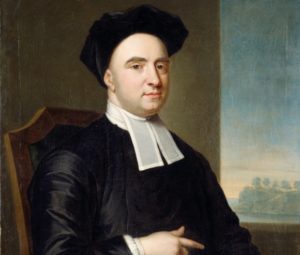
“The only things we perceive are our perceptions”. This thought of the British empiricist George Berkley states his belief that reality consists exclusively of minds and their ideas. In other words, everything we see or believe is only a collection of all our senses representing the ideas and the imagination of the person perceiving them.
Charles Darwin and Human Memory
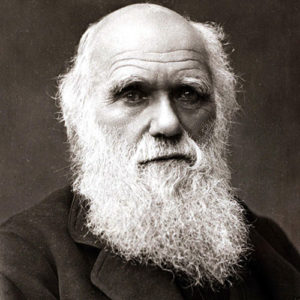
Charles Darwin (1809–1882) supported the idea that human memory developed through the process of evolution as a way to preserve the significant characteristics that helped our species adapt to different kinds of environments. According to Darvin, memory enables us to perform specific tasks based upon our remembered experiences.
Ebbinghaus and the 19th Century Memory Researchers in Psychology
The second half of the nineteenth century marks the rise of psychology as an independent scientific discipline. Hermann Ebbinghaus (1850–1909) was a German psychologist who pioneered the experimental study of memory.
During his detailed studies of memory, he used himself as both an experimenter and a subject. Ebbinghaus spent a lot of time learning lists of unrelated syllables in different learning conditions. Namely, he would start a memory experiment by learning lists of words and testing how many he could recall.
Using this methodology, Ebbinghaus discovered a wide range of fundamental human memory principles, such as the learning curve concepts, the concept of overlearning, savings, and the concept of the forgetting curve.
The Concept of the Learning Curve
The learning curve is a concept according to which there is a required time period for a given fact to be learned, i.e., the progression rate of learning measures against time.
In 1885, Ebbinghaus’s experiments showed that the more a task is repeated over time, the less time it takes for us to complete it, as the information is gradually transferred to our memory through repetition.
The Concept of the Forgetting Curve
Even though it shares some similarities with the learning curve, the forgetting curve concept is actually its opposite. This curve shows a decrease in the brain’s ability to retain memory over time.
Ebbinghaus claims that unless the learned knowledge is consciously reviewed and continuously repeated, we start losing the memory of the learned experience within days or months.
The Concept of Overlearning
Overlearning refers to a process of rehearsing a skill even after it cannot be improved anymore. This improves the short-term retention of information, but it also makes it so that we need more time to learn the skill. This continued learning prevents the forgetting of the previously stored data.
The Concept of Savings
This concept demonstrates that the learned information that appears to be lost may be stored somewhere in our mind. It may not be consciously available, but it can still have an unconscious influence on our behavior by serving as a platform upon which new memories can be built.
The Modern Views on Memory
Many movements in psychology contributed to the modern views of human memory. Two of the most significant ones are the Gestalt and behaviorist movements.
The Gestalt Movement in Psychology on Memory
The Gestalt movement, represented by the German researchers Wolfgang Kohler (1887–1967), Max Wertheimer (1880–1943), and Kurt Koffka (1886–1941), supported the Law of Simplicity.
Regarding human memory, the representatives of this movement supported the idea that the whole is different from the sum of its parts. According to the Gestalt principle, the brain perceives the meaning of the whole as more significant and more straightforward than the sum of its parts.
The Behaviorist Movement in Psychology on Memory
Behaviorism (Thorndike, Guthrie, Hollis) is a learning theory that addresses the functions of the brain indirectly. Namely, the representatives of this school of thought focus their attention on human behavior as a visible result of the brain’s invisible processes.
According to these scholars, learning is merely an acquisition of new behavior based on environmental conditions. In other words, learned behavior is a result of a sequence of experienced events, rather than a conscious thought process.
Conclusion
The questions of human behavior, cognition, development, or nature demand an understanding of the formation, development, and storing of memory. Our memory is one of the most intimate aspects of ourselves. Cognitive psychology believes that sharing our memories with other people can easily be considered an act of sharing a part of our soul.
Fun Facts
Did you know?
- The brain’s cognitive abilities naturally weaken after we turn 50 years of age.
- If we feel happy, it’s more likely that it will be easier for us to recall happy events, and vice versa. Namely, an individual’s current emotional state plays a significant role in retrieving past information stored in our brain.
- When we experience an event with strong emotions, it will remain longer in our memory.
- Flashbacks are involuntary memories that result in sudden and powerful re-experiencing of a memory. It’s sometimes so intense that the individual has a feeling of “reliving” the experience and cannot fully recognize it as a memory.
- William James (1842–1910) was one of the first academics to describe memory retrieval problems, such as the tip-of-the-tongue phenomenon. This phenomenon occurs when a person is not able to remember something and put it in words. Still, there is this strong feeling that the retrieval of that information from memory is imminent.
- Our brain has a memory capacity that equals over 300 years spent watching TV!
- The electrical impulses that transmit the sensory information between the neuron cells in the brain can reach a speed of up to 268 miles per hour.
- Our first memories form between 2-6 years of age.
- Sugar consumption can negatively affect our memory.
- A deep night’s sleep is essential for well-maintained memory processes.